Find Your Forex Entry Point: 3 Entry Strategies to Try
Find Your Forex Entry Point: 3 Entry Strategies to Try
Published By Smart Securities & Commodities | Nov 2025
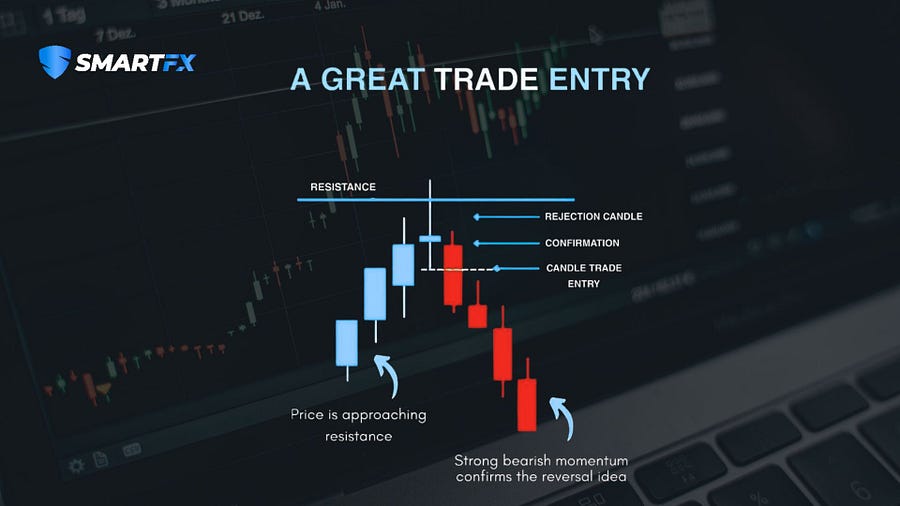
Finding the perfect entry point in forex trading is often the dividing line between a profitable trade and a losing one. While exit strategies, money management, and risk control are extremely important, a trader’s success still relies heavily on where and how they enter the market. A well-timed entry can help secure a favorable price, reduce drawdown, support a tight stop-loss placement, and maximize the profit-to-risk ratio. In contrast, poor entries limit potential gains even when the market direction is correct. That is why professional traders dedicate years to mastering their entry methodology.
In today’s highly reactive forex environment — driven by algorithmic executions, unpredictable macroeconomic events, and 24/5 liquidity — precision matters more than ever. Traders who understand how to enter positions with consistency, logic, and risk control stand a far greater chance of achieving long-term success. This article explores three advanced entry strategies used by seasoned traders to determine the optimum moment to execute positions. These are not generic concepts; they are refined, battle-tested techniques applicable in real-market conditions.
The Importance of a Defined Entry Strategy
Before diving into the methods, it’s essential to understand why solid entry rules are necessary. Many traders assume that if they know price is likely to go up or down, the entry point becomes irrelevant. In reality, nothing could be further from the truth. An entry point influences your stop-loss size, reward potential, and psychological comfort throughout the trade.
When traders enter impulsively, several problems arise. First, the stop loss often becomes too wide, increasing risk per trade. Second, profits may shrink because the entry was not positioned near a value zone. Third, the trader might face unnecessary drawdowns that test emotional resilience. And lastly, a poor entry sometimes leads to early stop-outs even when the trade idea is correct.
A defined entry strategy reduces randomness and increases consistency. It ensures that every trade is initiated with logic rather than emotion. Most importantly, it helps traders identify the best price at the best time — a crucial requirement in a market where every pip counts.
Strategy 1: Breakout Entry Using Confirmed Market Structure
Breakout entries are one of the most powerful methods used by trend traders, institutional traders, and algorithmic systems. A breakout occurs when price breaches a significant level — such as support, resistance, a trendline, or a consolidation zone — and continues in the breakout direction. However, retail traders often fail with breakout entries because they enter prematurely or without confirmation.
Understanding Market Structure
In advanced trading, breakouts are analyzed within the market’s structural framework. Market structure consists of swing highs, swing lows, higher highs, higher lows, lower highs, and lower lows. A confirmed breakout only occurs when the market invalidates previous structure and establishes a new directional flow.
For example, in an uptrend, a breakout above a previous swing high with strong volume confirms bullish continuation. Entering at this structural break gives traders a significant advantage: they follow momentum rather than trying to anticipate it.
Why Breakout Entries Work
Breakouts work because they reflect institutional activity. Banks, hedge funds, and liquidity providers initiate large orders at secure levels. When price breaks these areas, new liquidity flows into the market, accelerating the move. This creates a rapid, sustained push that makes breakouts ideal for traders who seek clean price action without excessive noise.
How to Execute a Professional Breakout Entry
- Identify a significant structural level
This could be a resistance zone, consolidation boundary, or a multi-session high. - Wait for a candle closure above or below the level
A wick break is not enough; professional traders require a body closure. - Confirm momentum using volume or volatility indicators
Tools such as ATR, volume profile, or volatility expansions confirm strength. - Enter on the retest or continuation
Aggressive traders enter immediately; conservative traders wait for a pullback and confirmation candle. - Place stop loss below the structure
This ensures protection against false breakouts.
When Breakout Entries Are Most Effective
Breakout entries perform exceptionally well during:
- High-impact news releases
- Trend continuation phases
- Asian session consolidations breaking in London session
- Range markets turning into directional markets
Used correctly, breakout strategies offer high probability entries with strong momentum and minimal hesitation.
Strategy 2: Pullback Entry Using Dynamic Support and Resistance
Pullback entries are widely considered the most reliable entry style in professional trading because they allow traders to join the trend at a discounted price. Instead of chasing price, traders wait for the market to retrace to a value zone, confirm support or resistance, and then continue in the main direction.
Dynamic vs. Static Support and Resistance
Static support and resistance levels remain fixed, while dynamic levels shift according to market movement. Dynamic levels include:
- Moving averages
- Fibonacci retracement zones
- Trendlines
- Channels
- VWAP or anchored VWAP
These tools help traders identify areas where the market temporarily pulls back before resuming the trend.
Why Pullback Entries Are Effective
Pullback entries work because markets rarely move in straight lines. Even the strongest trends experience corrections. These retracements provide entry opportunities at better prices. Pullbacks show:
- A reduction in volatility
- Profit-taking from earlier traders
- Temporary counter-trend activity
Once the market completes its correction, institutional traders re-enter, pushing price in the original trend direction. Entering at this moment provides both safety and precision.
The Ideal Pullback Setup
A typical pullback entry involves:
- Determine trend direction
Use market structure, moving averages, or multi-timeframe confirmation. - Wait for a retracement into a value zone
Common retracement zones include 38.2%, 50%, or 61.8% Fibonacci levels. - Look for bullish or bearish continuation signals
Examples include engulfing candles, pin bars, or trendline rejections. - Wait for confirmation
Professional traders avoid guessing; they wait for a signal. - Enter at the candle close
This ensures the pullback has completed. - Place stop loss safely beyond the retracement level
This protects against deeper corrections.
Why Most Traders Fail with Pullbacks
Many beginners enter too early, before the retracement completes. Others enter too late after price has already moved. Successful pullback entries require discipline, precision, and confidence. When executed well, they offer excellent trade locations with high reward-to-risk ratios.
Strategy 3: Rejection Entry Using Price Action and Liquidity Zones
The rejection entry strategy is the most advanced of the three. It focuses on how price reacts at key liquidity zones, where large institutions accumulate and distribute orders. This strategy requires a deep understanding of price behavior and is commonly used by professional traders, prop firms, and market makers.
Understanding Liquidity Zones
Liquidity zones are areas on the chart where price has previously shown violent movement, long wicks, or consolidation. These zones attract institutional interest because they contain pending orders and trapped retail positions. When price revisits these areas, it often reacts strongly, creating ideal rejection entries.
Why Rejection Entries Work
Rejection entries identify the exact moment when the market invalidates a potential reversal and resumes direction. This type of entry is precise and often catches the beginning of a major move. It reduces stop-loss size significantly and offers early positioning.
How to Identify Rejection Zones
- Look for areas with long wicks
Wicks show where liquidity was grabbed and price quickly reversed. - Identify previous turning points
These areas reveal where institutions intervened. - Mark zones created by imbalance or inefficiency
These gaps often get filled and rejected.
Executing a Rejection Entry
- Wait for price to approach a liquidity zone.
- Observe the reaction through candlestick patterns such as:
- Pin bars
- Rejection wicks
- Engulfing patterns
- Order block rejections
- Enter when the candle closes in the direction of rejection.
- Place stop loss beyond the liquidity boundary.
- Let the trade unfold naturally — rejection entries often produce swift moves.
Where Rejection Entries Work Best
- Near institutional order blocks
- At liquidity sweeps or false breakouts
- During strong trend retracements
- On higher-timeframe support and resistance
This technique is highly effective but requires strong chart-reading skills and emotional discipline.
Choosing the Right Entry Strategy for Your Trading Style
Not every forex strategy suits every trader. Some prefer momentum-based breakouts. Others lean toward value-based pullbacks. More advanced traders favor rejection setups. Choosing the right entry strategy depends on personality, risk tolerance, trading timeframe, and emotional comfort.
Breakouts suit forex traders who enjoy momentum. Pullbacks suit those who prefer patience and confirmation. Rejection entries suit those who want precision and tight stops.
The key is to master one entry type before moving to the next. Switching strategies too often leads to inconsistency.
The forex market rewards precision, patience, and consistency. Your entry point is not just the place where your trade begins — it is the foundation of your entire trade management system. Whether you choose breakout entries, pullback entries, or rejection entries, the most important factor is that you follow your rules and remain disciplined.
Mastering these three entry strategies will dramatically improve your accuracy, reduce emotional trading, and increase your long-term profitability. When combined with proper risk management, market structure understanding, and multi-timeframe analysis, your entries will become sharper, more confident, and more consistent.
#forex #forex online trading #forextrading #forex news #forexsignals #forexstrategy #forex indicators #gold #forex trading platforms #mt5 trading platforms

Comments
Post a Comment